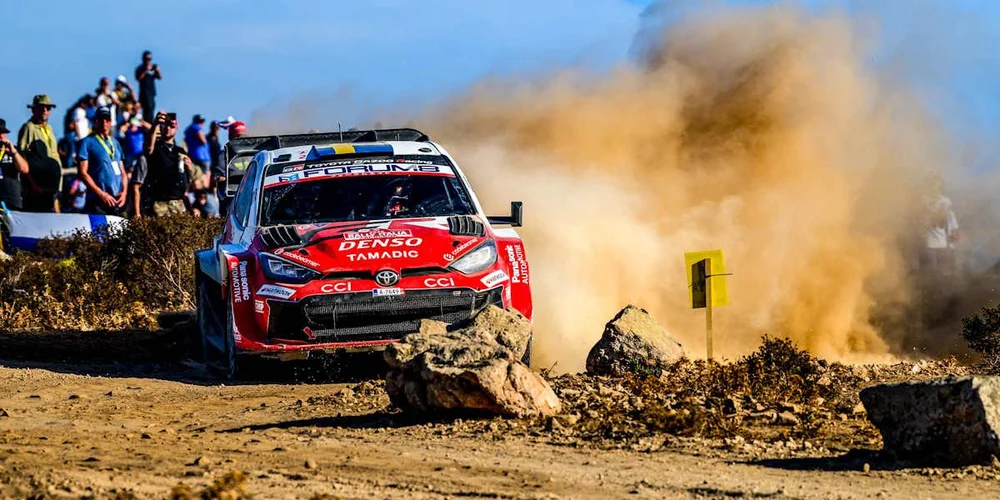
On October 25, 2026, SPEED SPORT published an account of Petter Solberg reflecting on his son Oliver’s pursuit of a World Rally Championship title. The story places Petter Solberg at the center of a family narrative shaped by ambition, competitive achievement, and a painful finish. Oliver had come close to winning the world championship during his first full Rally1 season, bringing a significant opportunity within reach. Yet the decisive rally ended with a crash in the final corners. That contrast gives the story its central tension: a championship campaign strong enough to inspire pride, ending in disappointment.
The question surrounding Oliver Solberg is how his near-title campaign should be understood alongside its final setback. According to SPEED SPORT, Petter discussed his son’s abilities, competitive spirit, and desire to win while revisiting the decisive accident; the article has a publication date, but Petter’s remarks cannot be independently confirmed as newly made that day. The distinction matters when reading the story as a current news development rather than a retrospective account. Its focus is the father’s perspective on a season that brought Oliver close to a historic family achievement. The details behind that opportunity deserve closer attention.
Oliver Solberg’s Near Miss and Petter’s Family Perspective
- SPEED SPORT published its account of Petter Solberg’s reflections on October 25, 2026.
- Oliver Solberg approached a world championship during his first full Rally1 season.
- A crash in the final corners at Rally Italia Sardegna shaped the decisive finish.
For the Solberg family, the stakes extended beyond one result on a rally stage. The account describes the possibility of a father and son both becoming world rally champions, an achievement that ultimately remained out of reach. Petter’s response, as presented by SPEED SPORT, combines recognition of Oliver’s qualities with the emotional weight of the closing accident. His Instagram post after the event provides another part of that response. The episode therefore carries two connected stories: Oliver’s attempt to secure the title and his father’s view of the effort behind it. What made the opportunity so significant becomes clearer through the season’s defining details.
Petter Solberg Connects Oliver’s Rally1 Season to the Title Fight
The campaign behind Oliver Solberg gives Petter’s reflections their sporting context, beginning with a full season in Rally1 and ending within reach of the world championship. SPEED SPORT’s October 25 article revisits that journey through the father’s perspective rather than presenting only the final result. Oliver’s proximity to the title is central to the account. His season had created a genuine championship opportunity, making the closing accident part of a larger competitive story. The distinction between the campaign and its final moments shapes the emotional weight of Petter’s response, which looks beyond the last corner.
Petter’s assessment emphasizes three connected qualities: his son’s ability, his competitive spirit, and his determination to win. Those elements form the substance of the championship campaign described by SPEED SPORT. They also explain why the story does not rest solely on the crash at Rally Italia Sardegna. The father’s perspective acknowledges the standard Oliver reached across his first full Rally1 season, placing the decisive setback within a broader account of effort and performance. Each quality contributes a different dimension: capability concerns what Oliver could deliver, while competitive spirit and ambition describe the drive behind his pursuit of the title.
At Rally Italia Sardegna, the decisive incident arrived in the final corners, according to the article’s summary. That timing gives the Rally Italia Sardegna finish its particular force: the title opportunity remained alive until the closing stages, when a crash changed the outcome. The account connects that moment to Petter’s reflections, bringing sporting consequence and family emotion into the same frame. It is a precise sequence, not an extended account of the rally’s every stage. The final corners become the point where a season-long pursuit and one immediate result meet, leaving the family to process both.
Petter’s Instagram post adds a personal dimension to the story, connecting his public response with the family’s experience of the lost opportunity. The Petter Solberg narrative consequently moves between a father’s evaluation of his son and the wider significance of a possible shared championship legacy. The account identifies that family ambition as a meaningful part of the aftermath. Its details invite attention to the relationship between sporting achievement and the people who experience a result beyond the timing screens. A near-title campaign can leave a lasting family memory even when the ultimate prize goes elsewhere, and that tension leads to two ways of reading the finale.
Rally Italia Sardegna Left Two Sides of Oliver’s Season in View
The closing accident and the season that preceded it create two distinct ways to read Oliver Solberg’s championship pursuit. One reading begins with the result: a crash in the final corners at Rally Italia Sardegna interrupted a campaign that had brought him close to the world title. The other begins with the distance he had travelled competitively, reaching that position during his first full Rally1 season. Both readings arise from the same sequence of events. The difference lies in whether the finale dominates the story or becomes one part of a longer sporting effort.
Petter’s emphasis on his son’s ability offers the clearest basis for examining the campaign beyond its final result. SPEED SPORT presents him as recognizing Oliver’s capabilities alongside his competitive spirit and determination to win. Those qualities frame the championship campaign as an achievement in its own right, even though the title remained beyond reach. A result-focused reading gives greater weight to the final accident, while a season-focused reading considers how close Oliver came to the championship. Neither requires a different account of the incident. Each gives a different part of the same sporting record greater prominence.
The family dimension adds another layer to the world rally championship opportunity described in the article. Petter and Oliver had the possibility of joining the group of father-and-son combinations to win world rally titles, a prospect that gave the season significance beyond Oliver’s individual campaign. That possibility ultimately did not become reality. The emotional stakes therefore came from both the competitive result and the family milestone that had appeared within reach. In this reading, the disappointment is specific: one title opportunity ended alongside the prospect of a shared achievement, giving Petter’s reflections a personal context.
For readers assessing the account, the distinction between observed events and their meaning is especially useful. The Rally1 season, the late crash, Petter’s assessment, and his Instagram post each contribute a different kind of information. The sporting sequence describes what happened, while the father’s comments convey how he viewed Oliver’s campaign. The family ambition explains why the result carried an additional emotional dimension. Keeping those elements distinct produces a more precise interpretation than allowing the final accident to define the entire season. The remaining question concerns how the article’s evidence supports the connection between competitive promise and family disappointment.
The Final-Corner Crash Against Oliver’s Championship Progress
The strongest evidence for understanding Oliver Solberg’s season comes from placing the championship opportunity beside the final accident. SPEED SPORT describes a driver who came close to the world title during his first full Rally1 campaign, then encountered a decisive setback in the closing corners at Rally Italia Sardegna. The two details measure different parts of the same story. The season establishes the competitive position Oliver reached, while the crash explains the immediate outcome. Read together, they give the disappointment its specific scale: a title pursuit ended at the point when the remaining opportunity was being decided.
Petter’s response supplies a second body of evidence through his emphasis on Oliver’s ability, fighting spirit, and determination to win. Those assessments connect the final result to the work and ambition behind the championship campaign. The family’s hope of seeing a father and son both become world rally champions adds a further dimension, turning the missed title into a lost shared milestone as well as an individual sporting disappointment. As an editorial reading, the account gains its force from this combination of competitive proximity and family significance. The exact weight of each element depends on which part of the story receives the closest attention.
A stronger documentary record would place the Rally Italia Sardegna incident alongside a fuller account of the championship outcome and Petter’s own words. The article summary identifies the crash’s timing, his evaluation of Oliver, and an Instagram post shared after the event. Direct access to the original post and the complete published interview would sharpen the connection between those elements. Such material would also help distinguish Petter’s immediate reaction from his broader reflections on the season. The current account supports a clear sequence of events, while the complete wording would add precision to the interpretation of his response.
Petter Solberg’s Championship Perspective Reframes the Missed Family Milestone
The central editorial reading is that Oliver’s near-title campaign matters as much as the last-corner accident in explaining Petter’s response. The crash supplies the dramatic endpoint; the season supplies the achievement that made the endpoint painful. One moment changed the result. It did not erase the campaign that preceded it. The family’s possibility of sharing world rally championship glory gives that contrast its distinctive meaning. The account cannot settle every detail of Petter’s personal experience, but it presents enough to connect sporting ambition with family disappointment. That connection, rather than manufactured controversy, is the story’s strongest interpretive thread.
The Instagram post becomes particularly relevant when read alongside the family milestone that remained unrealized. Petter’s public response, as described by SPEED SPORT, sits between pride in Oliver’s qualities and the emotional aftermath of the decisive crash. The post offers a tangible point of reference for that response, while the championship opportunity explains why the moment carried meaning beyond the result itself. The next useful detail to follow is how Petter’s own words describe Oliver’s campaign and its ending. That distinction keeps the focus on the father’s documented perspective, rather than turning a family’s disappointment into a broader claim about the sport.
Oliver Solberg’s Unfinished Family Championship Story
If Oliver’s near-title campaign becomes the lasting reference point, Petter’s reflections could be read through the combination of competitive progress and family ambition. The account published by SPEED SPORT places both elements beside the closing accident, giving readers a view of what the season meant beyond its final result. Oliver’s first full Rally1 campaign brought him close to the world championship, while his father highlighted the qualities that carried him through the pursuit. That combination gives the championship campaign a distinct place in the family’s story, shaped by achievement as well as disappointment.
The final corners at Rally Italia Sardegna remain the defining image: a championship opportunity reaching its decisive moment before a crash changed the outcome. Set against that image, Petter’s Instagram post represents a personal response to a result that also ended the prospect of a shared family milestone. The contrast is not between success and failure alone. It is between the distance Oliver travelled during the season and the single moment that determined how the campaign concluded. Petter’s recognition of his son’s ability and determination gives that contrast its human dimension, without taking attention away from the sporting result.
What deserves attention now is the detail of Petter’s own account of Oliver’s season, particularly how he connects the driver’s qualities with the closing disappointment. SPEED SPORT has placed that perspective alongside the missed opportunity for a father and son to become world rally champions. A fuller understanding rests on the words Petter shared and the specific events they address, rather than on assumptions about the family’s private feelings. Oliver came close. The title remained out of reach. For Petter Solberg, the story sits where a remarkable championship pursuit meets a family ambition left unfinished.